Times Tables Worksheets
Times tables worksheets for any table from zero to twelve, with an answer key. Pick a single table to drill it, or leave it on "Any" and set the factor ranges to mix several tables together. Print a different sheet every day — the problems are generated, not picked from a fixed set of pages.
Times tables practice. Mixed tables to twelve, with an answer key.
Customize this worksheet
Title and instructions
The page
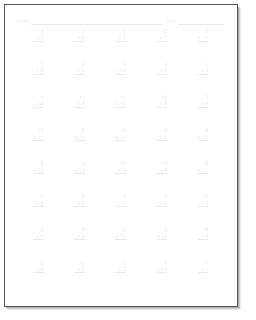
Multiplication · 0-12 × 0-12 · 40 problems · 50% review · with answer key · name line
Print at 100% or Actual size — not “Fit to page”, which shrinks the sheet and makes the measurements wrong.
One Table at a Time
Choosing a times table fixes one factor and varies the other, which is the shape most children meet first: the sevens, in order or shuffled, against zero to twelve. It is a good way to build a table up, and a fast way to find the two or three facts inside it that are not yet secure.
A sheet of nothing but one table has an obvious limit, though. Thirty problems that all multiply by seven stop being practice somewhere around the tenth, because the answer can be reached by adding seven to the line above rather than by recall. The Mix in easier facts control is the fix: it fills part of the sheet with facts from earlier tables, so the target facts arrive unpredictably and have to be known rather than counted to.
Where the Order Comes From
"Easier" is not a guess here. It follows the same progression as Spaceship Math, the series this site has published for years: the ones, then the zeroes, then the twos, and outward from there, with each step adding three or four new facts to the ones already learned. A sheet drilling the sevens will mix in facts from earlier in that order and never harder ones.
The reasoning behind the order is set out in Dad's Eight Simple Rules for Mastering the Times Table, which is worth reading before drilling anything.
Other Ways to Practise
For a timed drill, the two minute tests use the classic eighty-problem grid with a score box. For mixed practice without a single table in focus, see multiplication practice. There is also a multiplication chart to keep beside the work.
Print at 100% or Actual Size rather than "Fit to Page".

Copyright 2008-2026 DadsWorksheets, LLC
As an Amazon Associate, I earn from qualifying purchases.


- Copy paper
- #2 pencils
- Big pink erasers