Lattice Multiplication Worksheets
Lattice multiplication worksheets with an answer key. One factor runs along the top of the grid, the other down the side, and every cell holds a single digit-by-digit product split by its own diagonal. Add down each diagonal channel and the answer reads off the left side and along the bottom.
Lattice multiplication. Multiply each pair of digits, then add down the diagonals.
Customize this worksheet
Title and instructions
The page
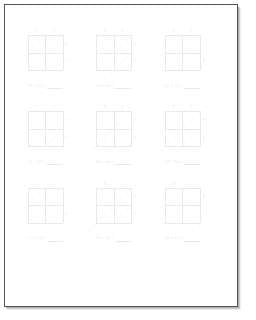
Lattice multiplication · 2 by 2 digits · 9 problems · with answer key
Print at 100% or Actual size — not “Fit to page”, which shrinks the sheet and makes the measurements wrong.
How the Lattice Works
Every cell is one fact. For 36 × 86, the cell where 3 meets 8 holds 24 — the 2 above the diagonal, the 4 below it. Nothing larger than a single times-table fact is ever multiplied, which is the point: a student who knows the facts can do a four-digit answer without carrying anything during the multiplying.
The carrying happens once, at the end, adding down the diagonals. The diagonals on these sheets run past the edge of the grid on purpose — that is where each column of the answer is written.
Who It Helps
The lattice separates the two things the standard algorithm asks a student to do at once: recall a fact, and keep track of place value. The grid holds the place value, so all that is left is the facts. For a student who knows the facts but loses the columns, it often works when nothing else has.
It is worth saying that it is not a shortcut, and it is not how most adults multiply. It is a way in. Plenty of classrooms teach it alongside the box method and move to the standard algorithm once both have done their job.
Where to Go Next
For the stacked form, see multiple digit multiplication. For the facts the lattice depends on, see multiplication worksheets and the Spaceship Math series.
Print at 100% or Actual Size rather than "Fit to Page".

Copyright 2008-2026 DadsWorksheets, LLC
As an Amazon Associate, I earn from qualifying purchases.



- Copy paper
- #2 pencils
- Big pink erasers